Materiality
(Priority Issues to Be Addressed)
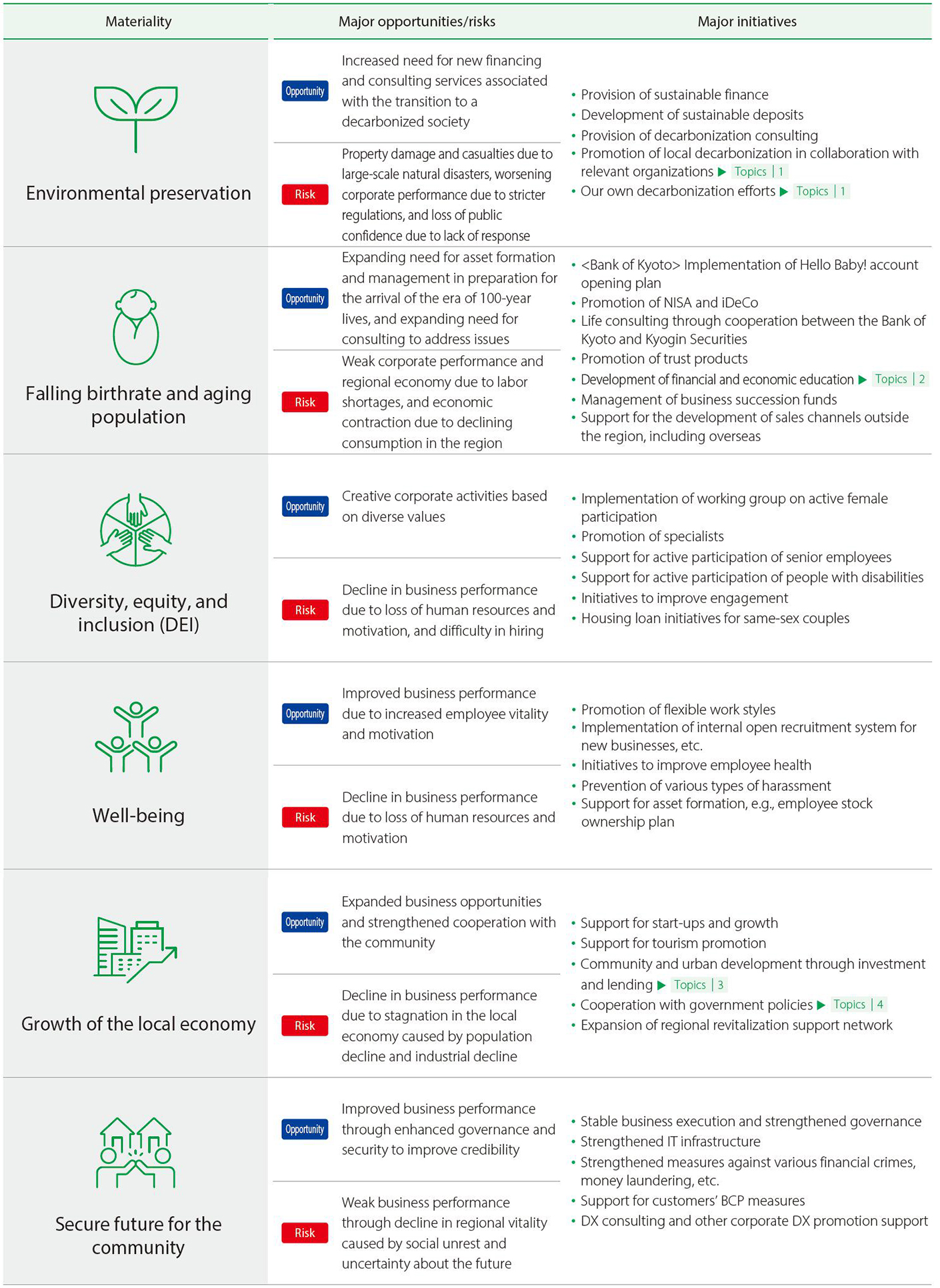
Materiality of the Group
Based on our Sustainability Management Policy, we promote sustainability management that enhances both social and economic value. We will create social impact through efforts to resolve the materiality we have identified as priority issues to be addressed.
Materiality Identification Process
Identification Process
Because the concept of sustainability is both broad in scope and open to wide interpretation, rather than narrowing the issues from the start, we started by gathering the thoughts of all employees so that many ideas would emerge.
On the other hand, since it is difficult for initiatives to comprehensively cover a large number of issues, we considered it necessary to define priority issues and proceeded with the process described on the following, with final identification by the Board of Directors.

― Aggregation of everyone's ideas
international norms (SDGs, etc.), stakeholder interests,
and issues set by external evaluation organizations
and "importance to Kyoto FG"
- * Composition:Directors, executive officers with a title responsible
for each division of the head office, Executive Officers,
and General Managers of each division

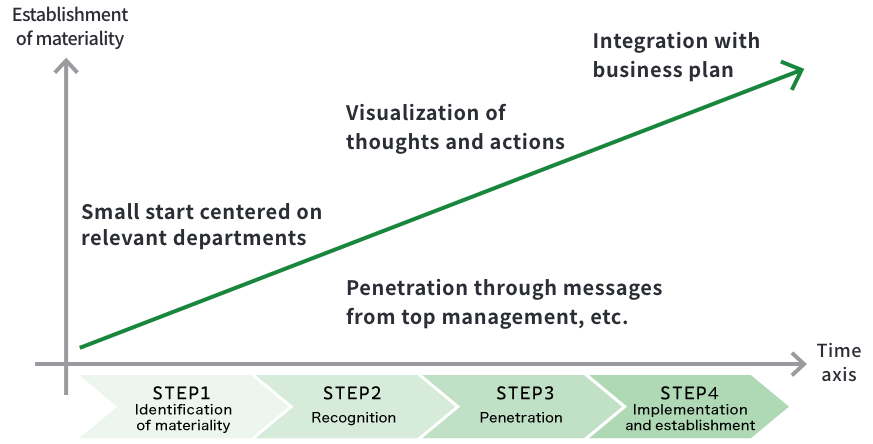
We will work to ensure they penetrate and become established the identified materiality within the Group, and will also utilize them in the formulation of our management strategies.
Topics
1. Energy conservation + creation: New building in Muko City obtains “ZEB” certification
In collaboration with Kyoto Prefecture, Muko City, and West Japan Railway Company, we are promoting the formation of “ZET-valley,” a hub for start-up companies involved in zero-emission technology (ZET) to promote the introduction of such technology into urban development.
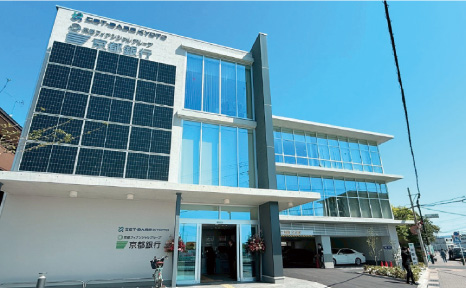
The Kyoto Financial Group MUKOU Building, newly constructed in front of JR Mukomachi Station in April 2025, has acquired the highest BELS ranking of “6 stars,” as well as “ZEB” certification based on the reduction of primary energy consumption to zero or negative. The first and second floors of the building are occupied by the Bank of Kyoto branch, and the third floor is an incubation facility for decarbonization-related start-ups (leased to Kyoto Prefecture).
2. Promotion of financial and economic education
As part of our social contribution activities, in addition to employees of sales branches providing financial and economic education at local schools, etc., the financial education team at headquarters, led by instructors with certifications from financial education institutions, is also involved in event planning.
We also conduct workplace seminars for managers and employees of our corporate customers, as well as online seminars for individual customers.
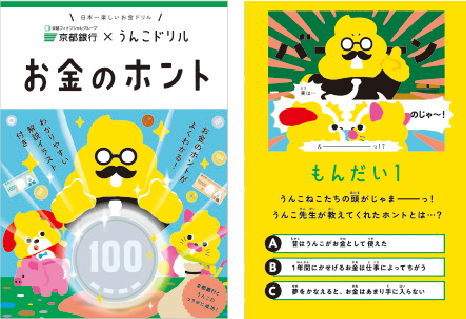
Production of supplementary materials
Seminars held (FY2024)
| No. of sessions | No. of participants | |
|---|---|---|
| Seminars for corporate and individual customers | 803 | 6,676 |
| Financial education seminars* | 17 | 860 |
| Seminars for individual customers | 33 | 1,579 |
- * Seminars for children, pupils, students, and faculty
Initiatives for the future (FY2024)
| Participants | Remarks | |
|---|---|---|
| Waku-Waku WORK LAND (Kyoto City original program) |
955 students from 96 elementary schools in Kyoto City |
Sponsored since 2007 |
| Economics Koshien (organized by Kyoto Tournament) |
22 students from 11 high school teams in Kyoto | Hosted since 2016 |
| Summer financial education seminar for elementary school students |
40 people (18 families) |
Contents renewed in 2023 |
3. Investment in renovation of old private houses to create lodgings, commercial facilities, etc.
The “Kyogin Machizukuri Fund” has been established jointly with the Organization for Promoting Urban Development to invest in projects to renovate old private houses and vacant stores in specific areas of Kyoto Prefecture and develop them into lodging, commercial, and gathering facilities.
Specifically, four investments have been made to date, including one which provided funding to support the renovation of an old private house in the Naka-Uji area of Uji City, Kyoto Prefecture, and opening of a specialty café that offers products using the local specialty, matcha green tea.

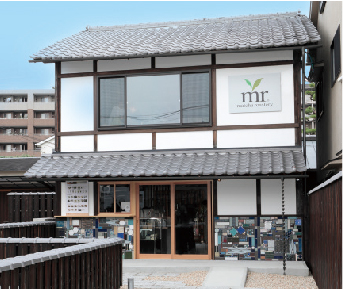
Project No. 4 (Uji City)
4. Crowdfunding based on hometown tax
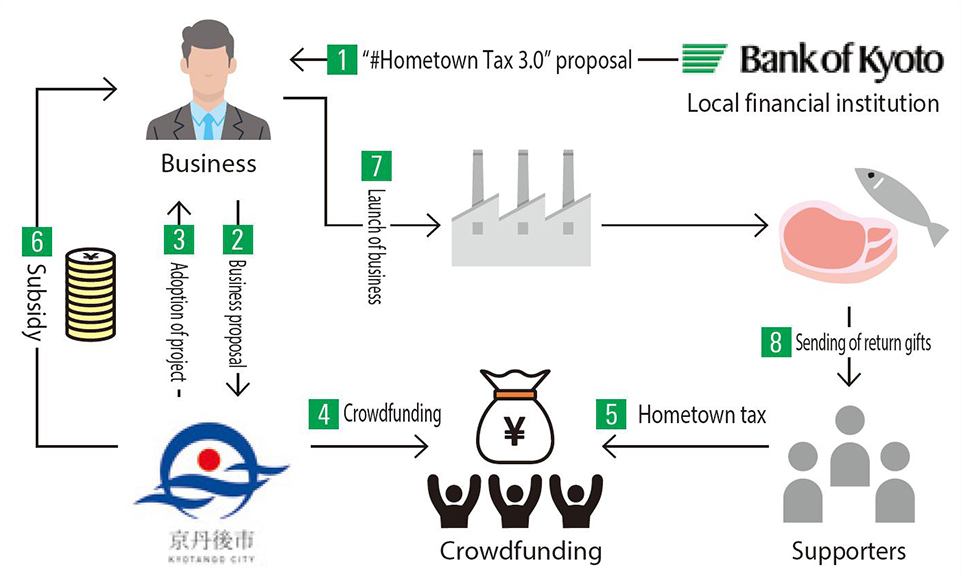
Aiming to revitalize the local economy by creating local products and attracting businesses, we are promoting “#Hometown Tax 3.0,” a hometown tax crowdfunding program, in cooperation with Kyotango City and other cities. The city is surrounded by the sea and mountains, and while it has attractive food resources such as the brand-name Taizagani crab and Kotobiki melon, it also faces challenges such as low supply of locally produced products due to the predominance of production of a variety of products in small quantities. In response, we proposed the use of this project to businesses outside the city that are willing to do business in the city and businesses within the city that are willing to develop products, and we are uncovering potential businesses, including attracting businesses to the city.
Overall image